Amelia Gentleman: The Journalist Who Exposed a National Injustice
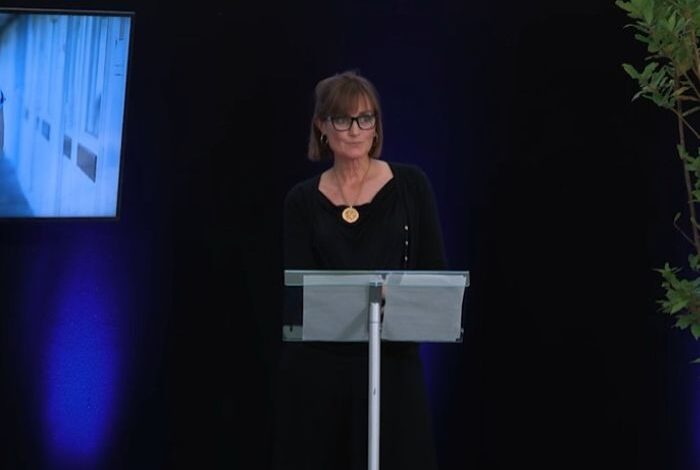
Amelia Gentleman is a British journalist best known for her work at The Guardian and for her major investigation into the Windrush scandal. Her work stands out because it is calm, detailed, and deeply human. She does not write from a distance. She builds stories through people, documents, policy detail, and the real pain caused when powerful systems fail.
Her journalism has helped show how government decisions can harm ordinary lives. She has written about immigration, welfare, prisons, social care, poverty, and justice. Her strongest work often begins with one person’s experience, then widens into a bigger picture of policy, power, and accountability.
She became widely known after exposing how members of the Windrush generation were treated as illegal immigrants in the United Kingdom, even though many had lived in Britain legally for decades. Some lost jobs. Some lost homes. Some were denied medical care. Others were detained or threatened with removal from the country they had long called home.
Amelia Gentleman: Early Life, Education and Background
Amelia Gentleman was born in 1972. Her full name is Amelia Sophie Gentleman. She studied Russian and History at university, a background that later helped shape her work as an international correspondent.
She is the daughter of David Gentleman, a respected British artist and designer. Her family background connects her to the arts, ideas, and public life, but her own career has been built through careful fieldwork and serious journalism.
She is married to Jo Johnson, a British politician and former government minister. He is the brother of former Prime Minister Boris Johnson. Despite this connection to politics, she has kept her work as an independent journalist separate from party life. Her career is built on evidence, interviews, and the duty to hold power to account.
Amelia Gentleman’s Career at The Guardian
Amelia Gentleman began her journalism career after university. She trained at the Press Association before moving to The Guardian, where she built a long and respected career. She has also worked abroad, including time in Moscow, Paris, and Delhi.
Her overseas work gave her experience in different political and social settings. In Moscow, she covered post-Soviet Russia. In Paris, she wrote from one of Europe’s major political centres. In Delhi, she worked as a correspondent and gained deeper insight into social change, inequality, and public life in India.
When she returned to Britain, much of her work focused on social affairs. She wrote about people affected by welfare reforms, immigration rules, housing problems, prisons, and public services. This became one of her main strengths: she could take a complex policy and show its real effect on a human life.
Amelia Gentleman’s Writing Style and Method
Her method is not loud or dramatic. It is steady and precise. She listens closely, checks facts, and follows the trail even when progress is slow. Her work shows that strong journalism does not always need dramatic language. It needs patience, courage, and proof.
She often writes about people who have been ignored. These include migrants, prisoners, disabled people, low-income families, and those caught inside harsh systems. Her writing gives them dignity without turning their pain into spectacle.
Amelia Gentleman and the Windrush Scandal
The Windrush scandal became the defining investigation of her career. The term “Windrush generation” refers to people from Caribbean and Commonwealth countries who came to Britain after the Second World War, many as British subjects. They helped rebuild the country, worked, paid taxes, raised families, and became part of British society.
Decades later, harsh immigration rules placed many of them in danger. Because some lacked formal documents, they were wrongly treated as illegal immigrants. This happened despite the fact that many had arrived as children and had lived in the UK for most of their lives.
Amelia Gentleman brought these cases into national focus. One of the most powerful cases involved Paulette Wilson, who had lived in Britain for about fifty years after arriving from Jamaica as a child. She was detained and threatened with removal. Her case showed how cruel and careless the system had become.
Other cases soon followed. Anthony Bryan, who had lived in Britain for decades, was also threatened with removal. Many people had lost work, benefits, homes, and access to healthcare. Their lives were damaged not because they had done wrong, but because the state refused to accept their right to remain.
The Hostile Environment and State Failure
The scandal was closely linked to the “hostile environment” policy. This approach made daily life difficult for people who could not prove their immigration status. Employers, landlords, banks, and health services were placed under pressure to check documents.
In practice, the policy harmed many lawful residents. People who had every right to live in Britain were asked for papers they had never been given or had never needed. Some had arrived on parents’ passports. Others had records lost or destroyed. Many had no reason to think they would one day be asked to prove a life already lived in Britain.
Amelia Gentleman’s journalism showed that this was not a small error. It was a deep failure of policy, record-keeping, and political judgement. Her work forced ministers to answer difficult questions and pushed the scandal into Parliament and national debate.
Political Impact of Amelia Gentleman’s Windrush Work
The impact was major. The Windrush scandal led to a public apology from the government. It also led to promises of compensation and reform. Amber Rudd resigned as Home Secretary in 2018 after intense pressure over the scandal.
This was a rare moment when journalism directly changed the national conversation. Her work helped move the story from private suffering to public accountability. It also showed the value of local detail, patient interviews, and moral clarity.
Books by Amelia Gentleman
Her book, The Windrush Betrayal: Exposing the Hostile Environment, expanded her investigation into a fuller account of the scandal. The book explains how the hostile environment developed, how it harmed lawful residents, and how victims fought to be heard.
It is not only a book about immigration. It is also about memory, race, bureaucracy, and the danger of careless power. It shows how a country can forget the people who helped build it, then punish them for lacking paperwork.
The book was longlisted for the Baillie Gifford Prize for Non-Fiction in 2019. It remains one of the key works on the Windrush scandal and the human cost of immigration policy.
Awards and Recognition
Amelia Gentleman has won some of the most respected awards in British journalism. Her Windrush investigation won the Paul Foot Award, which honours powerful investigative and campaigning journalism. She also received the Cudlipp Award, an Amnesty award, and the British Journalism Awards Journalist of the Year title.
She has also been honoured by the London Press Club and the Orwell Prize. These awards reflect the strength, care, and public value of her work.
Her recognition is not based on fame alone. It comes from journalism that exposed injustice and led to real consequences. That is why her Windrush work is often seen as one of the most important British investigations of the past decade.
Other Major Work by Amelia Gentleman
Although Windrush is her best-known work, her career includes much more. She has written about young offenders, prisons, welfare reform, disability benefits, housing, poverty, and social care. Her article on life inside Ashfield young offenders’ institution showed her ability to enter closed spaces and explain them with care.
She has also written on modern digital harms, online exploitation, artificial intelligence, and the way new systems can damage vulnerable people. Her work continues to focus on power, harm, and responsibility.
Why Amelia Gentleman Matters
Amelia Gentleman matters because her work proves that journalism can still change lives. She does not rely on noise. She relies on evidence, time, and close attention to people who have been pushed aside. Her career shows that the strongest stories often begin with one person being treated unfairly. When followed with discipline, that single case can expose a whole system.
She has become one of Britain’s most important social affairs journalists because she writes with fairness, depth, and purpose. Her work on Windrush will remain a landmark in British journalism, not only because it exposed a scandal, but because it helped restore dignity to people who had been denied it.
FAQs About Amelia Gentleman
1. Who is Amelia Gentleman?
Amelia Gentleman is a British journalist and author best known for her work at The Guardian. She has written widely on immigration, welfare, prisons, poverty, social care, and public policy. She became especially well known for exposing the Windrush scandal, one of the most important British journalism investigations of recent years.
2. Why is Amelia Gentleman famous?
Amelia Gentleman is famous for her investigation into the Windrush scandal. Her work revealed how long-term UK residents from Caribbean and Commonwealth backgrounds were wrongly treated as illegal immigrants. Some lost jobs, homes, benefits, and access to healthcare, while others faced detention or removal from the UK.
3. What book did Amelia Gentleman write?
Amelia Gentleman wrote The Windrush Betrayal: Exposing the Hostile Environment. The book explains how the Windrush scandal happened, how immigration policy damaged innocent lives, and how victims fought to prove their right to live in Britain.
4. What awards has Amelia Gentleman won?
Amelia Gentleman has won major journalism awards, including the Paul Foot Award, the Cudlipp Award, an Amnesty award, British Journalism Awards Journalist of the Year, London Press Club Print Journalist of the Year, and the Orwell Prize. These awards recognise her powerful investigative work and public impact.
5. What subjects does Amelia Gentleman write about?
Amelia Gentleman often writes about social justice, immigration, welfare, prisons, poverty, public services, and the effect of government policy on ordinary people. Her journalism focuses on real human experiences and holds powerful institutions accountable.